IN CONVERSATION: YALDA BIDSHAHRI WITH TIRDAD HASHEMI & SOUFIA ERFANIAN
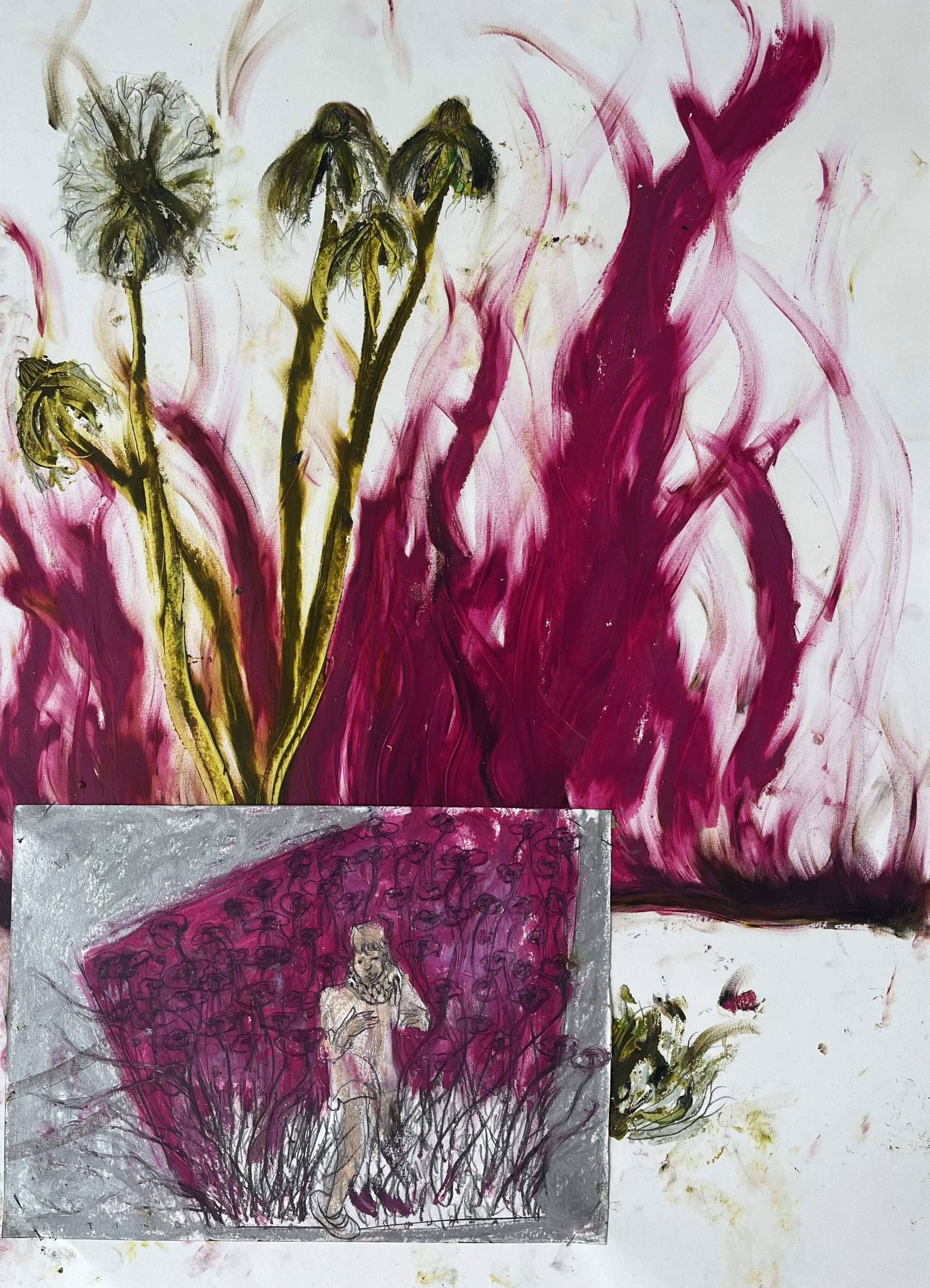
Yalda Bidshahri: Your ‘Flower’ series embodies so many of the ideas in the curatorial framework for my project with ROSVÂ, about kinship, resistance, and the cycles of life.
Can we go back to when the series began? I want to hear more about the time of the first drawings and how they came about. I know it was a period when you were tending to plants on a small terrace garden in your own home. How did that experience lead to the drawings?
Tirdad Hashemi: My aunt once told me that Soufia is like the sun in my life, and I think she’s right.
You can’t stop spring. No matter how much war or destruction there is, nature doesn’t wait for us. Spring comes anyway, and the flowers bloom again. The sun is the same. Whether you want it or not, when it touches your skin, it gives you a little more life.
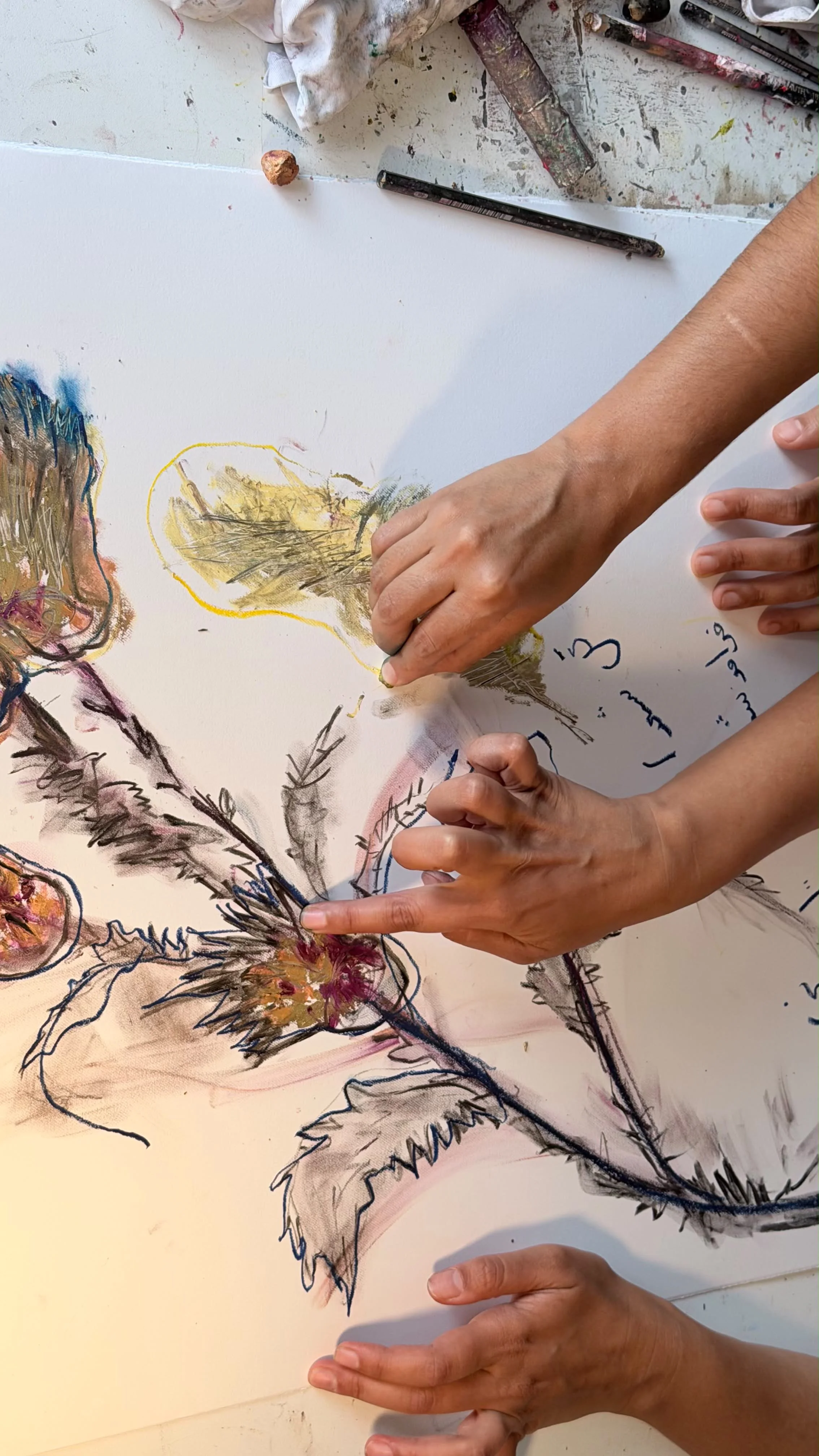
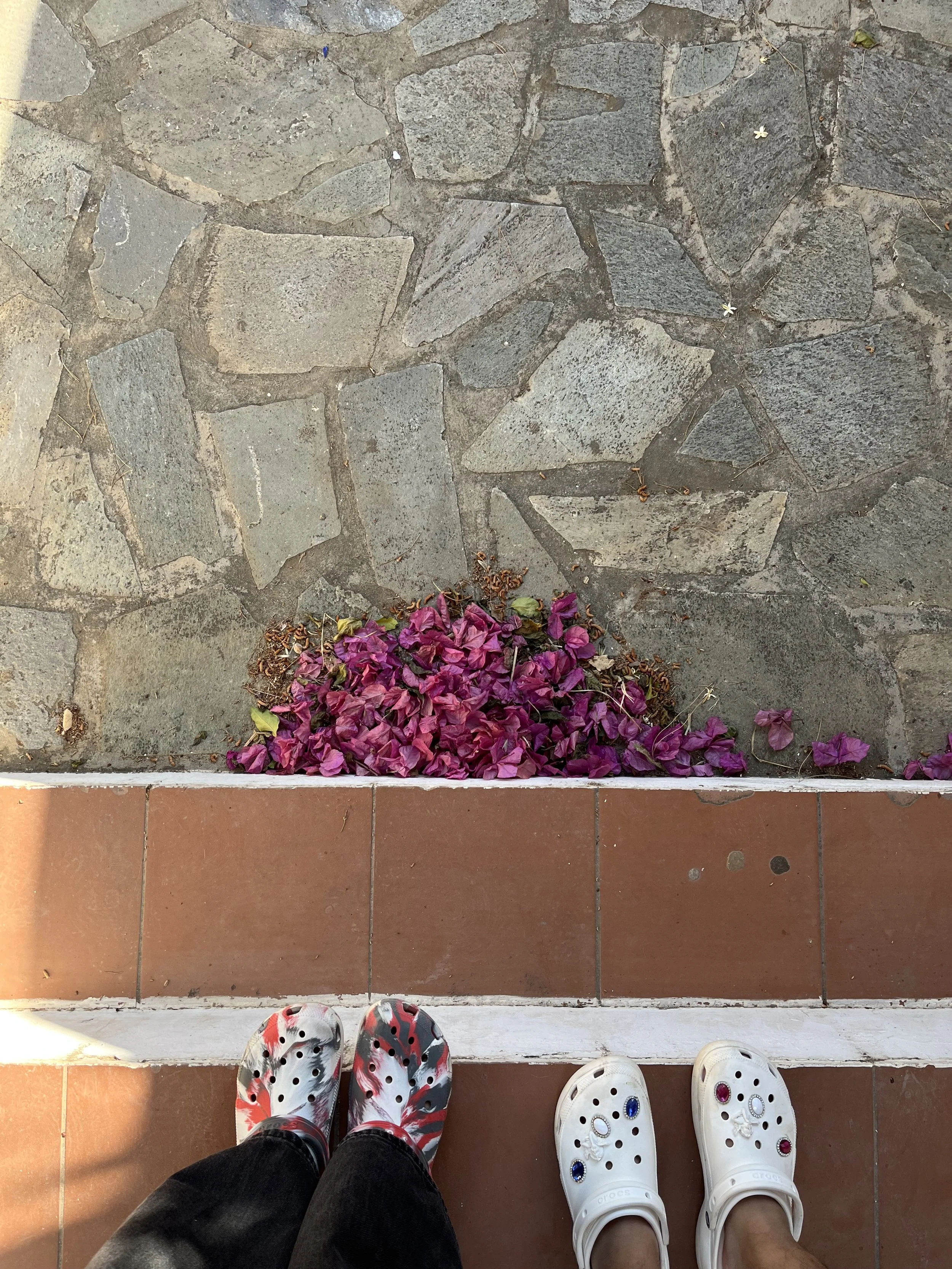
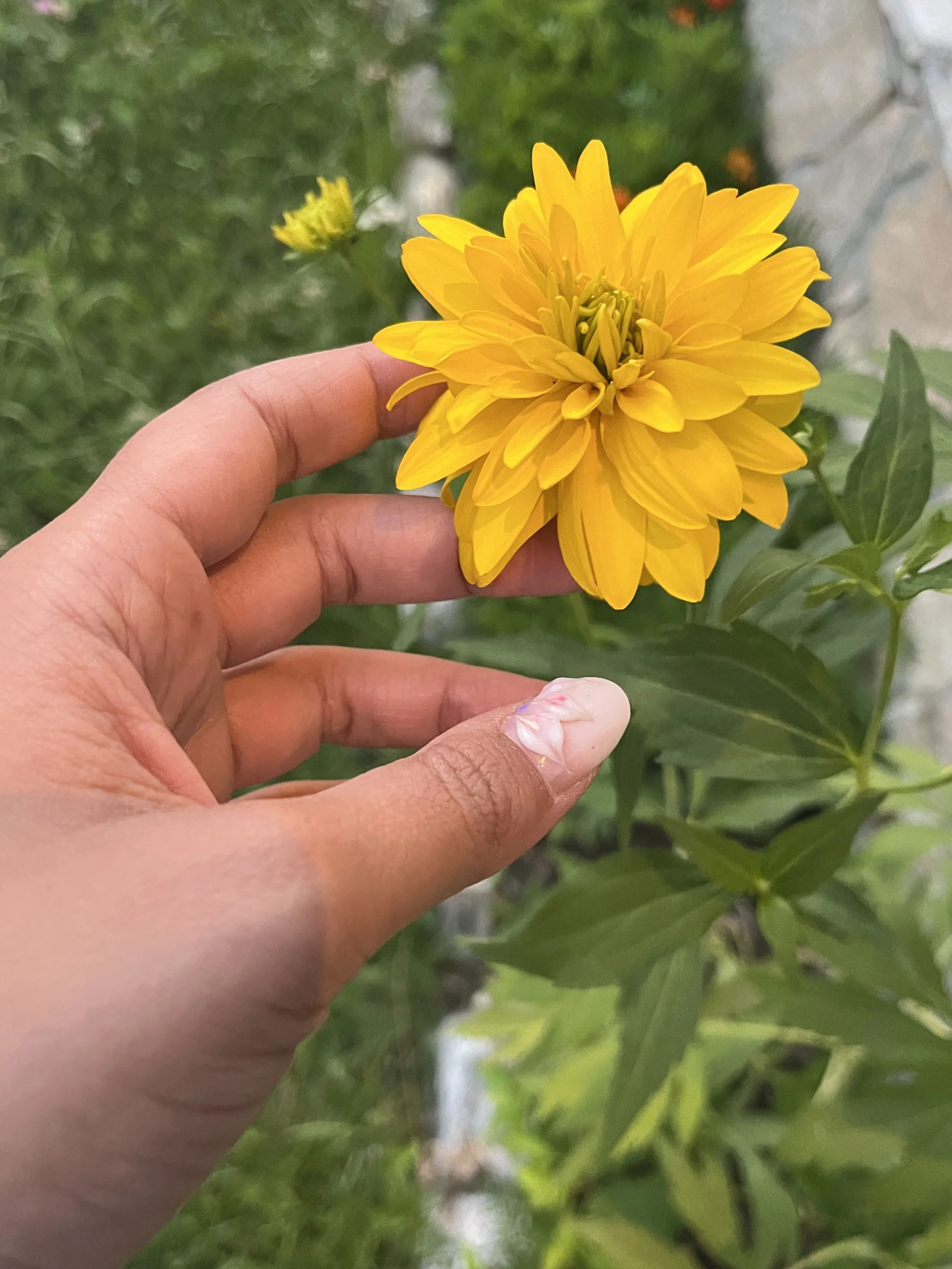
I’ve always felt that since I started collaborating with Soufia, a different kind of beauty has entered my work. I can genuinely see images that are beautiful in a way I hadn’t seen before, and that’s still fascinating to me.
I think I told you this before, but the first time I showed these flower drawings to my mother, she said, “These can’t be yours.” She was so used to my own drawings, which are much more violent and harsh. She couldn’t recognize me in these flowers.
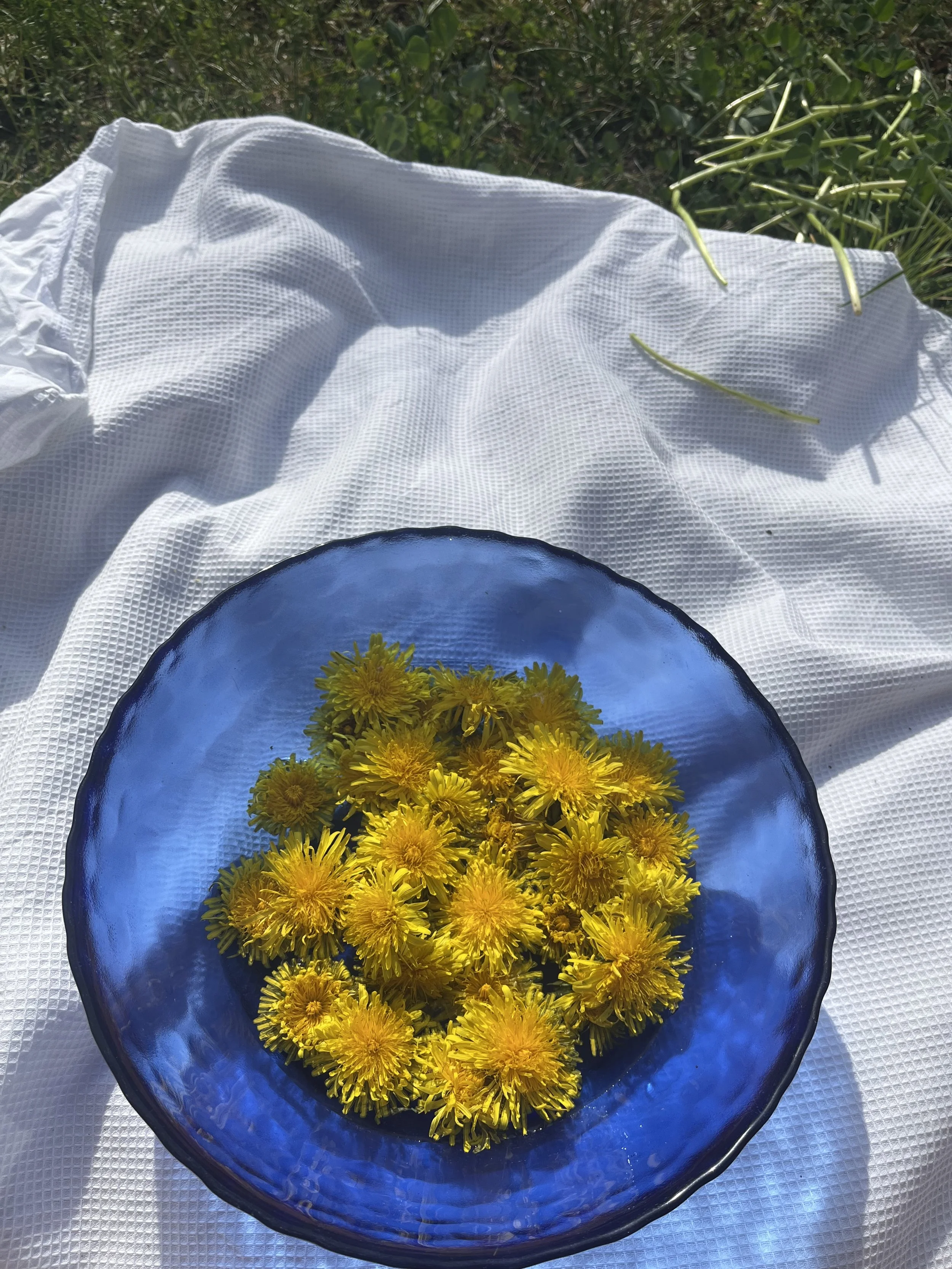
I also remember that one day Soufia said she wanted to make works with flowers. At exactly the same time, I had just started gardening on the small terrace of my home. I was spending time every day taking care of plants, watching them grow, and paying attention to very small changes. Somehow, those daily experiences, together with my collaboration with Soufia, naturally became the beginning of the Flower series.
YB: Can you tell me more about how your collaborative work is different from your individual practices? What emerges in the images from that space of togetherness?
Soufia Erfanian: I think that when I work on my own, my work becomes much more melancholic. And when Tirdad works on their own, their work becomes much harsher. In a way, both of our practices become darker when we’re apart. mine turns melancholic, while theirs becomes more brutal.
But when we work together on a painting or a drawing, something shifts. It’s as if a kind of care emerges between us without ever being spoken about. maybe we’re simply taking care of each other through the work. Unconsciously. Somehow, that heaviness is transformed, and it becomes visually beautiful.
YB: Many of the titles of the works in this series are drawn from an ongoing letter-writing practice. How do the words and images speak to one another? And what does it mean to invite the audience into that space of a close correspondence.
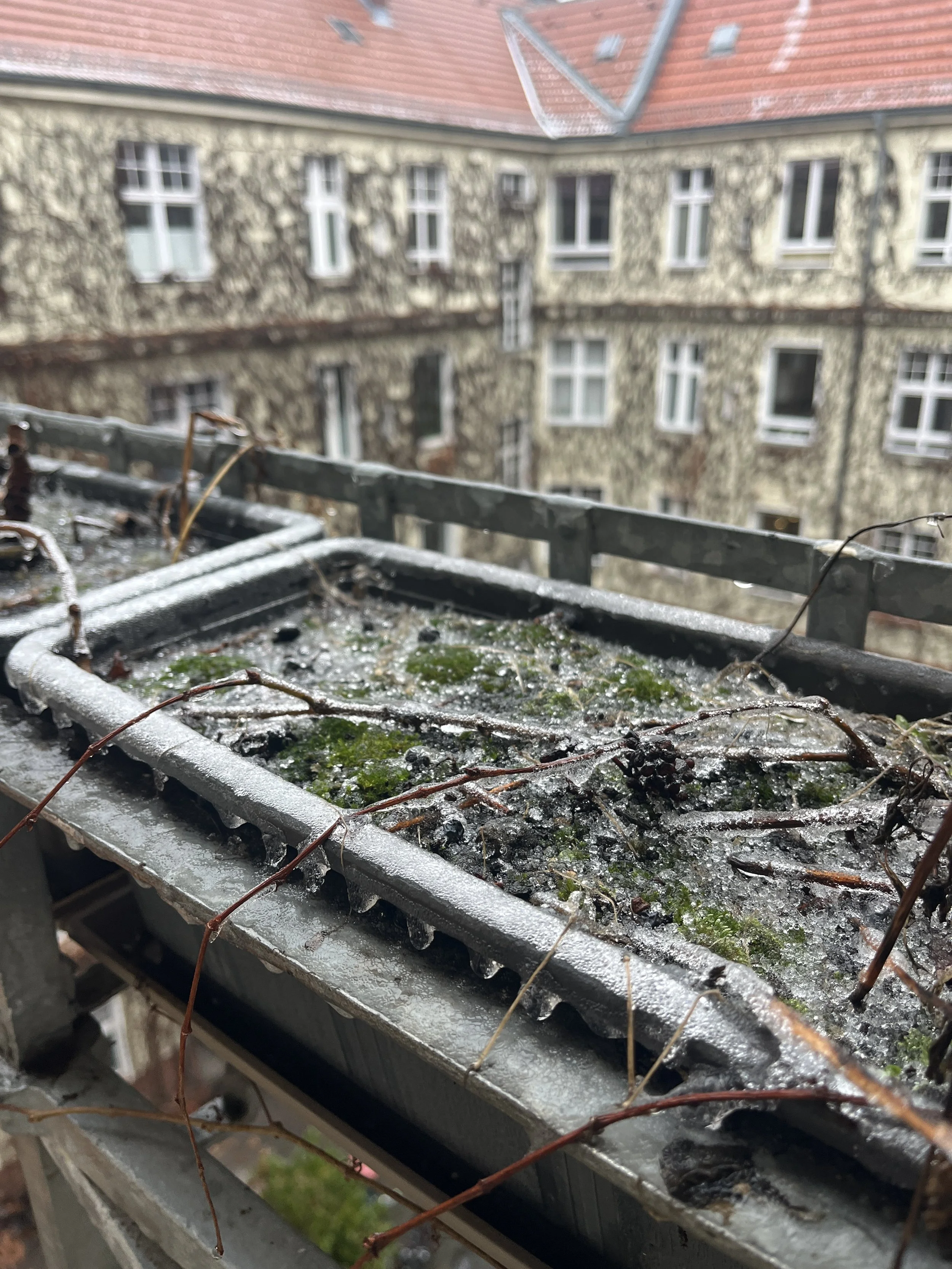
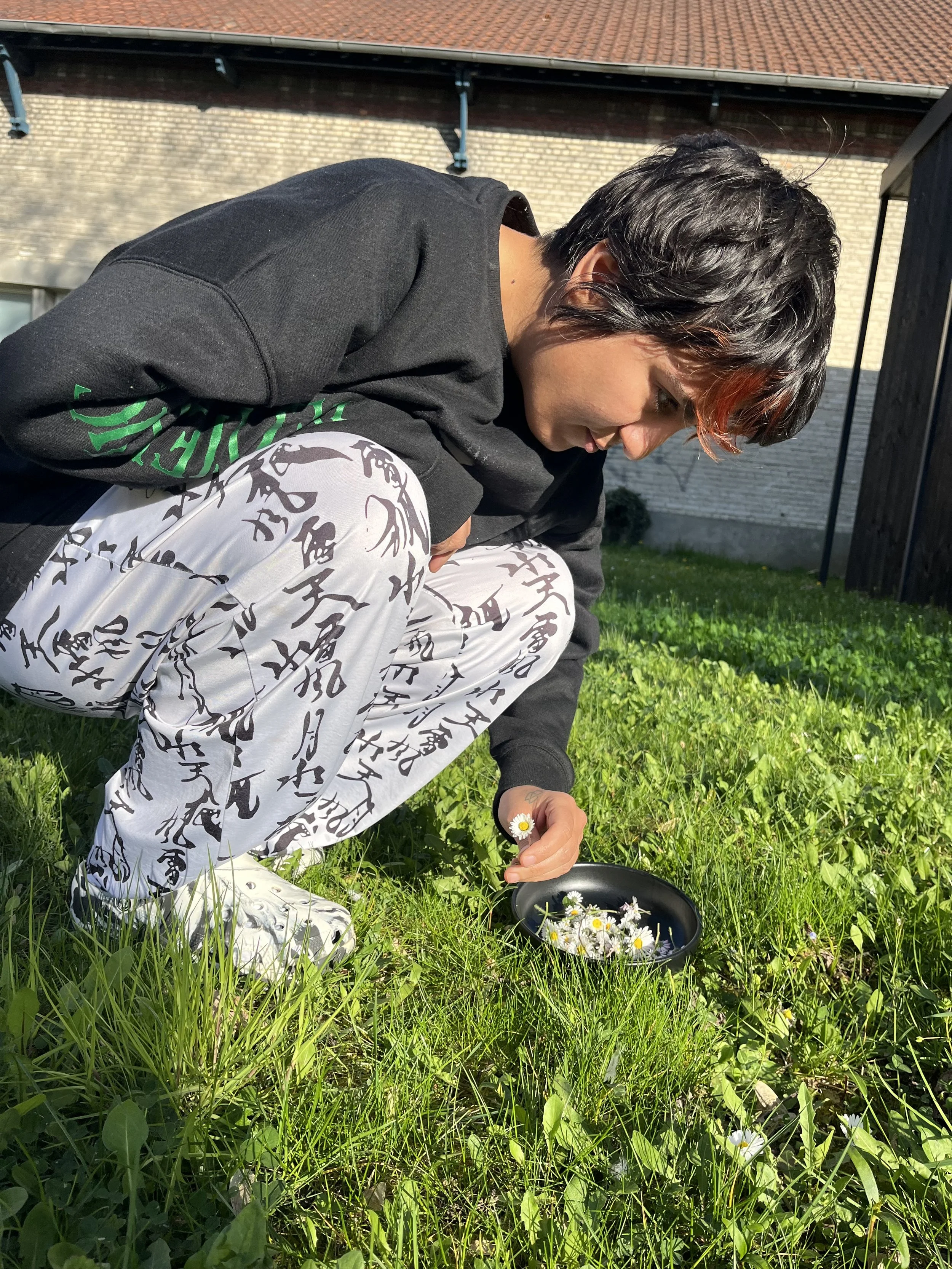
TH: I’ve always preferred writing to speaking. When you write, you have the time to choose your words more beautifully, and there’s a moment of reflection before anything is expressed. That’s why I sometimes communicate with people through letters.
Many of these texts grew out of that habit of writing. They began almost as a personal practice, and gradually became part of the work itself.
When you invite the audience into that story, it’s as if you’re sharing a memory with them. It allows them to come closer to your narrative and to form a more intimate connection with it. In that sense, writing becomes a way of reducing the distance between myself and the viewer, bringing us one step closer to each other.
YB: Within the compositions of this series, intimate scenes between human figures are suspended against a backdrop of flowers. Where do these portrayed moments come from? Are these your memories or something else? What draws you to capturing these tender gestures?
TH: This series of flowers is rooted in memories and in the people who have shaped our lives. Many of the figures are friends, members of our community, or sometimes even ourselves. The scenes are drawn from real moments of intimacy, care, and togetherness that we have experienced or witnessed. I’m interested in preserving these fragile gestures because they speak about friendship, chosen family, and the quiet ways we hold and support one another.
The figures are physically attached to the floral backgrounds with pins. For me, the pins hold them in place, binding them to the flowers, but they also suggest that these relationships can be painful. They speak to the paradox of intimacy, how the same bonds that sustain and support us can also wound us.
YB: In the ‘Flower’ series, flowers become more than symbols of beauty. They suggest that life continues to emerge, even in tough circumstances, through care and connection. I’m curious what you think tending to plants, to relationships, and to artistic practice have in common? And how do they help us carry on despite our struggles?
SE: To us tending to plants, relationships, and artistic practice all begin with the same quiet act: believing in growth. When you plant a seed, there is no guarantee it will bloom, yet you water it anyway. Relationships ask for the same kind of faith, they grow through patience, attention, and presence. Art, too, often emerges from our deepest wounds, transforming struggle into something that can be shared and understood.
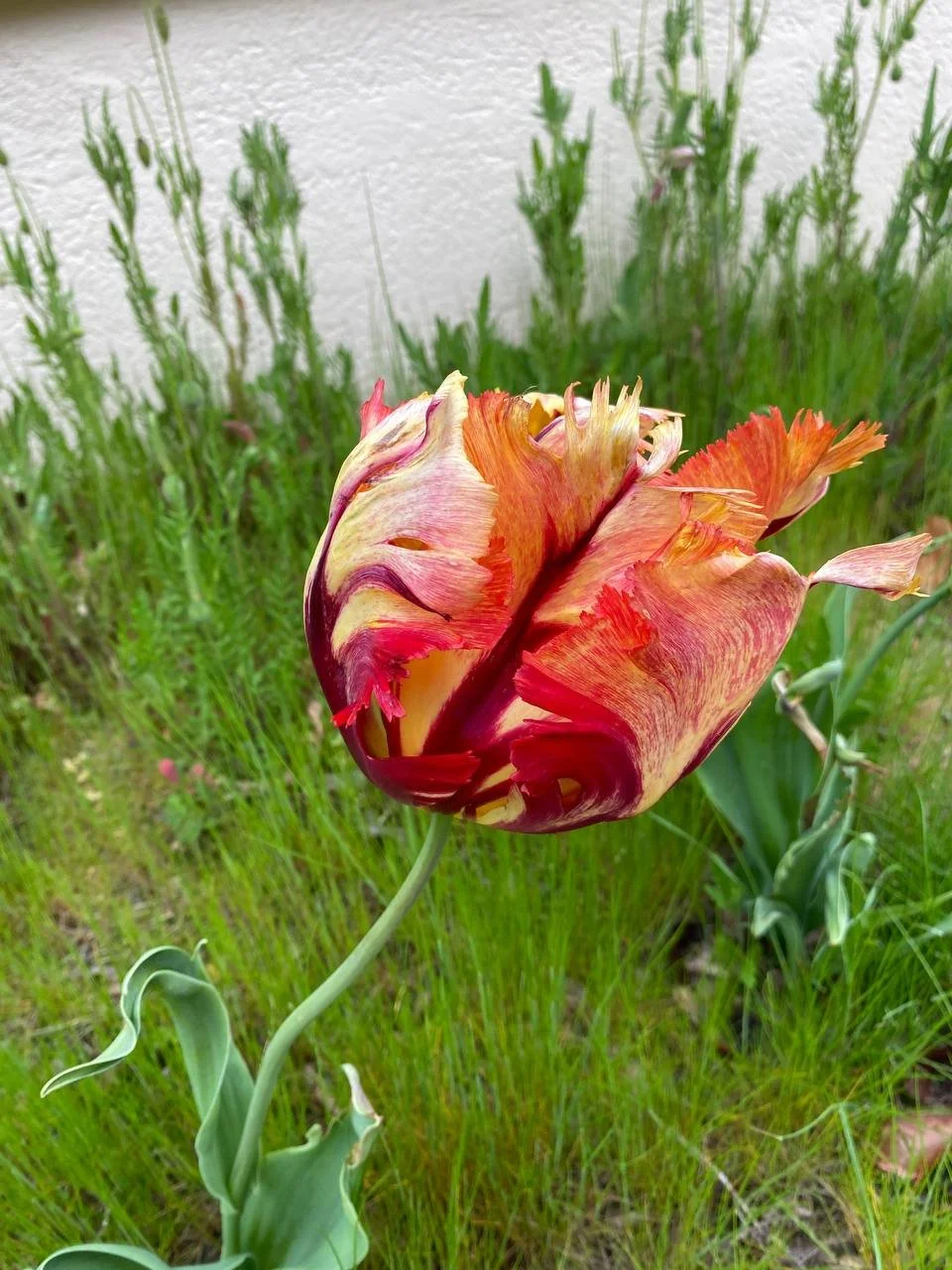
But they also share another thing: without care, they slowly wither. A neglected plant dries up. A relationship left unattended loses its warmth. Growth is never automatic; it is the result of continuous care.
I think this is why these three things help us carry on through difficult times. They remind us that life doesn’t always return in dramatic ways. Sometimes it comes back quietly, like a flower opening after a long season. To care for something is to believe that, even in the hardest circumstances, the possibility of new life still exists.
This conversation is part of عزیزم، دنیا گلستون میشه یک روز / ‘My dear, one day the world will bloom into a garden’, conceived by Yalda Bidshahri for the ROSVÂ Summer 2026 Guest Curator Residency