IN CONVERSATION: YALDA BIDSHAHRI WITH ELHAM RAHMATI
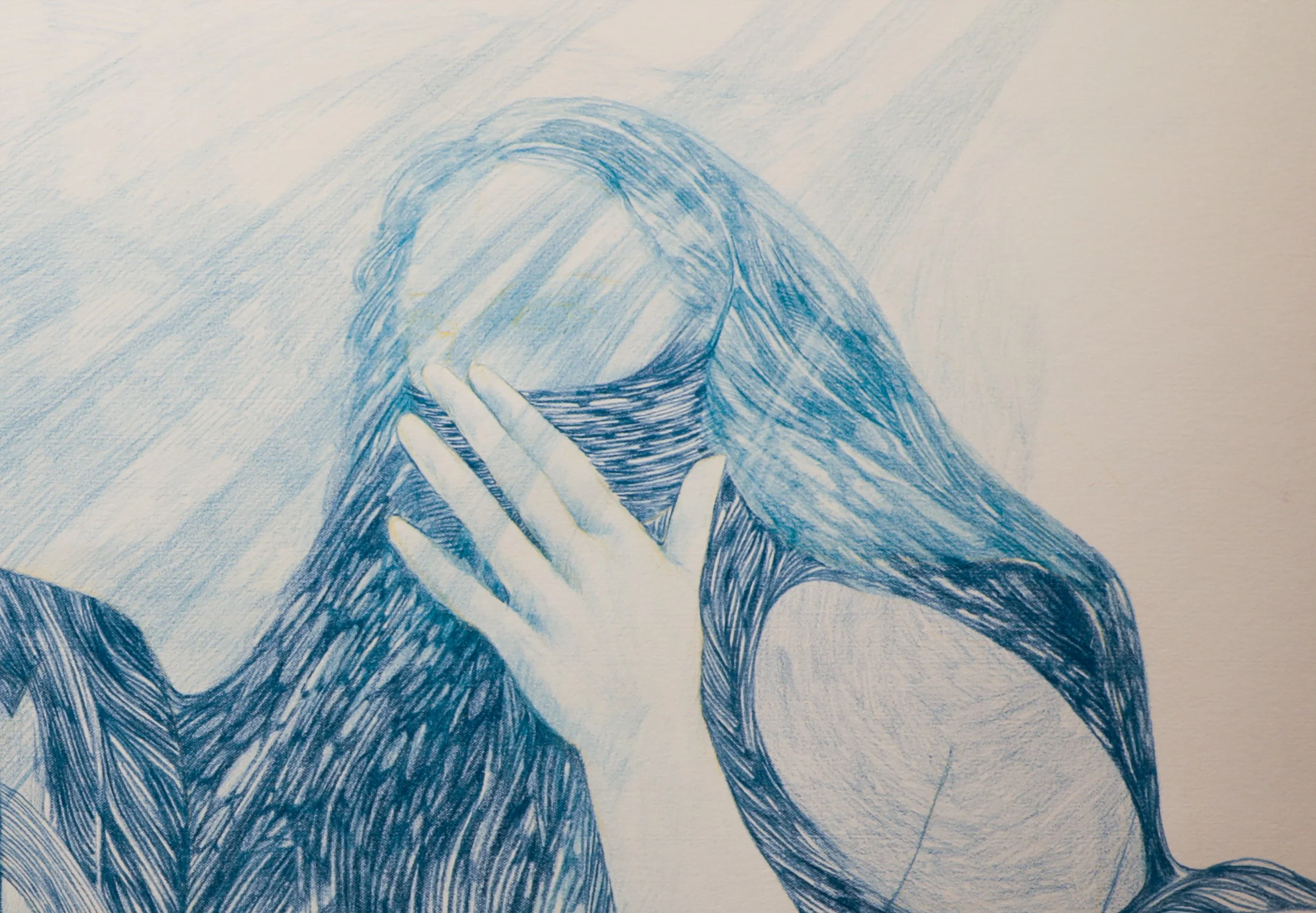
Yalda Bidshahri: I’m developing this residency around the idea that everything moves in cycles (life, death, rebirth) and around the question of how we continue to hold on to hope, return to ourselves, and grow toward one another despite systems that seek to isolate or diminish us. I’m interested in how these questions already exist in your practice.
Your practice is motivated by working towards liberation by building internationalist, feminist, and anti-imperialist solidarities. I’m particularly interested in your ongoing project ‘Under the Pretense of Hope’, exploring the visual representations of people in protest and what is held between them. So often images of protest focus on confrontation. Your work reminds us that resistance is also made through care and connection.
You know, you talk about your memory of protests, and how there are instances of protestors comforting you, offering a cigarette, opening their homes to you while running from the police, and so on. These memories contribute to your imaginations of liberated futures and become a resource to tap into throughout the struggle.
I’d love to hear about the origin of this series. What moment or experience did this emerge out of?
Elham Rahmati: The series emerged from my experience of witnessing moments of political dissent. The first time I consciously registered that standing with others in the streets carried real risk was during the 1999 student protests in Tehran. I was a a kid, and my parents brought us out in solidarity with students who were in direct confrontation with the authorities. Then in 2009, during the Green Movement, I was twenty and an art student, and I remember the euphoria of joining continuous street protests: what felt like a genuine political earthquake.
From there I became something like a second-hand witness to wave after wave of movements: the Arab Spring, Occupy, the anti-austerity protests in Greece, Rojava, the Great March of Return, Lebanon's 17 October Revolution, the Sudanese Revolution, Black Lives Matter, Sheikh Jarrah, Jin Jiyan Azadi, and now the global movement against the genocide in Gaza since October 2023.
What the series draws on isn't the confrontation itself, but what I remember running alongside it: a protester offering me a cigarette to cut the sting of tear gas, someone pulling me into their home or shop while we were being chased, being held after something frightening happened, resting together in public space in the aftermath. Those moments are where the tie between people stops being an obligation,being in the same place for the same cause, becoming something more like an enchantment. That's the material the drawings are made from: not the image of struggle as spectacle, but the intimacy that struggle makes possible.
I want to add something important here: I can't define political dissent as simply people against their state. Since the US-Israeli aggression on Iran began on February 28th, I've watched something else unfold: a nation rising against imperialism, gathering night after night in the major squares of every city. What struck me most wasn't the confrontation but recognizing intimacy now among people I might have once seen myself in opposition to.
That's the discovery this war forced on me: that suffering and resistance aren't as cleanly bordered as we imagine from a distance, and that the people we've sketched as opponents are far more complicated up close than the image we've made of them. The same care I've drawn from protest memory reappeared in a square where I didn't expect to feel at home in. It's made me rethink what I mean by dissent altogether: not only the standoff between people and power, but what a people, under oppression, choose to build between themselves instead of the fractures a foreign project spent a decade trying to plant there.
YB: How do you choose which moments from protests to draw?
ER: I look for the moments that don't usually make it into the image of protest we tend to see. Not the clenched fist or the tear gas cloud, but what happens just beside or after that. A cigarette offered to cut the sting of it. A door opened to let you hide. Being held after something frightening. Resting together once the adrenaline drains out. Those are the moments I return to, because they're the ones that stayed with me longer than the confrontations themselves.
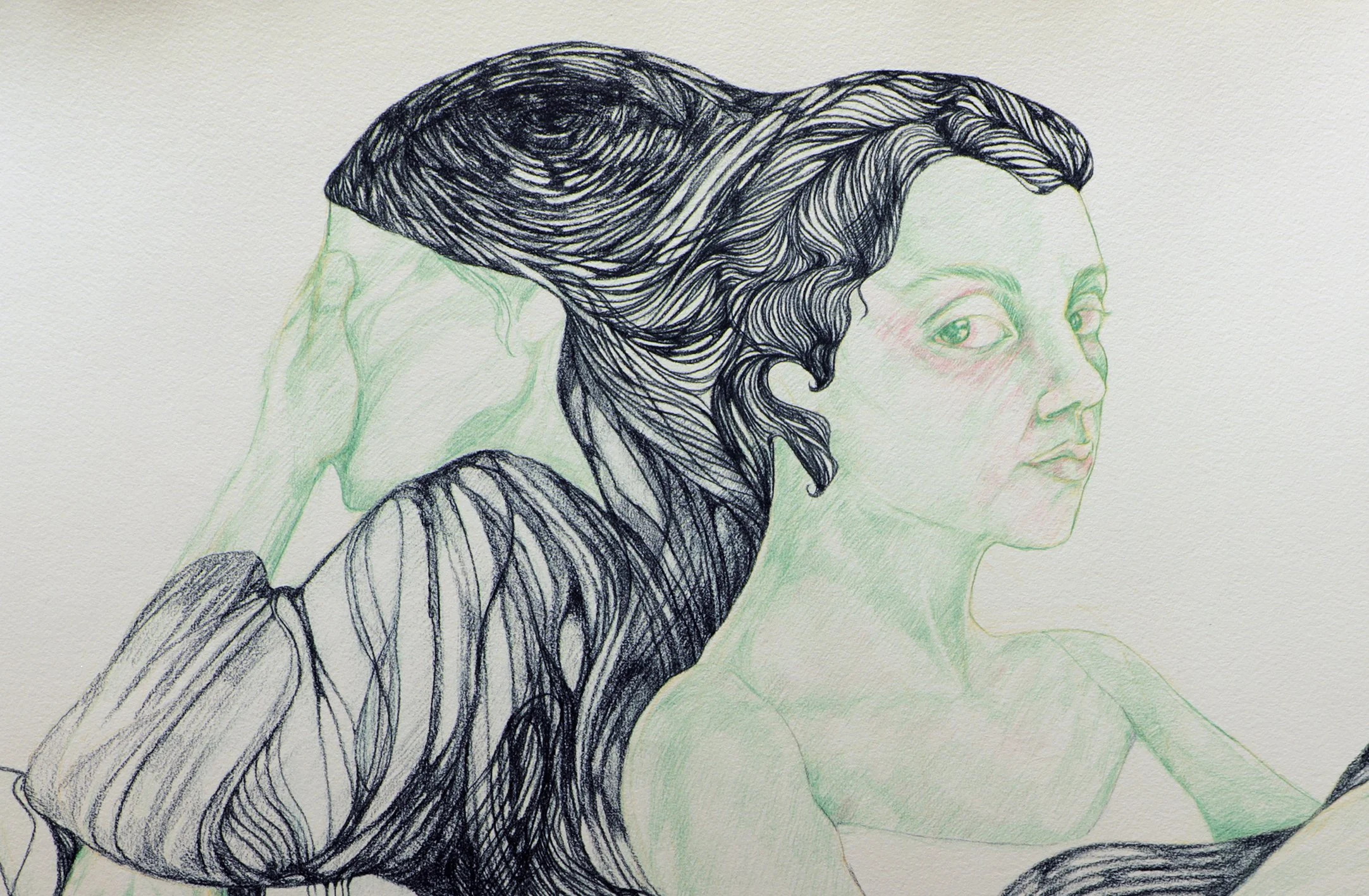
What I draw are the moments I've experienced or witnessed more than once, across different movements and different countries. If something happened to me only once, I'm less sure it belongs in the series. I'm looking for the gesture that repeats, that seems to surface in a Tehran street the same way it surfaces in Athens or Beirut, because that repetition is what tells me it isn't incidental. It's a pattern in how people in struggle actually treat each other, regardless of what specific fight they're in.
I look for the bond between people in struggle that isn't just the obligation to show up because we share an enemy, but because it becomes something more like enchantment. Care, offered by a stranger, for no reason except that you're both there. That's what I want the drawings to hold onto, because it's also what sustains people through defeat. Movements lose, materially, all the time. But that memory of being cared for in the middle of it, hat doesn't lose. It's a resource people tap into, and later it finds itself in another form of struggle against injustice.
YB: Can you talk to me more about hope and your understanding or experience of it? And what do you feel is the significance of hope in the struggle towards liberation and resistance against oppression.
ER: Hope, for me, isn't optimism. Optimism assumes things will probably turn out fine. Hope is something you choose to hold onto precisely because you have no such guarantee; it's closer to a discipline than a feeling.
A lot of what shaped this understanding was living through the 2010s wave of movements and watching most of them get called failures in retrospect. But that doesn't erase what happened inside those movements while they were alive, the ways in which people were transformed by being part of something collective, how they glimpsed, even briefly, that another way of organizing life together was possible.
I live with two realities at once: the fact of defeat, and the memory of that feeling. And I refuse to let the first cancel out the second. That's the tension I keep returning to: Gramsci's "pessimism of the intellect, optimism of the will." You can be completely clear-eyed about how stacked the odds are, how badly things can end, and still choose to act as though the outcome isn't decided. Hope isn't naivety about the odds. It's a refusal to let the odds be the only thing that determines what you do.
As for its significance in the struggle for liberation: I think oppressive structures need us to believe hope is foolish. If people are convinced that struggle is pointless, they stop struggling, and that's exactly what power wants. So sustaining hope isn't separate from resistance it is in actuality a form of resistance in itself.
YB: I wonder if we can talk about the act of drawing itself. What does drawing allow you to witness or preserve that photography or documentation might not? And can you give some insight into the process of making these drawings?
ER: There's something about the fleetingness of these moments that drawing suits better than photography. The gesture I'm trying to hold onto is often over in seconds, and it resists being fully capturedby memory, by image, by anything. But it still leaves a mark. Drawing feels like the right form for that: not a perfect record, but a trace of something that passed through and left an impression anyway. The line can be imprecise, searching, incomplete, the way memory itself is, and that imprecision is honest in a way a photograph can't be.
As for process, I usually start from memory rather than reference. I sit with a specific instance I keep returning to, and I try to find the gesture at the center of it: the exact position of a hand, the angle of two bodies leaning into each other. I don't aim for likeness or for a specific, identifiable person; I'm after the shape of the care itself, so it can hold multiple memories at once rather than being locked to one. The drawings tend to be spare. I don't want to overwork them, because part of what I'm preserving is the fleeting, unfinished quality of the moment. If I render it too completely, I think I lose the thing that made it feel true in the first place.
YB: Are these drawings acts of remembering? Your practice engages with the politics of memory and creating space for interpretation of what endures. What do you hope survives through these images?
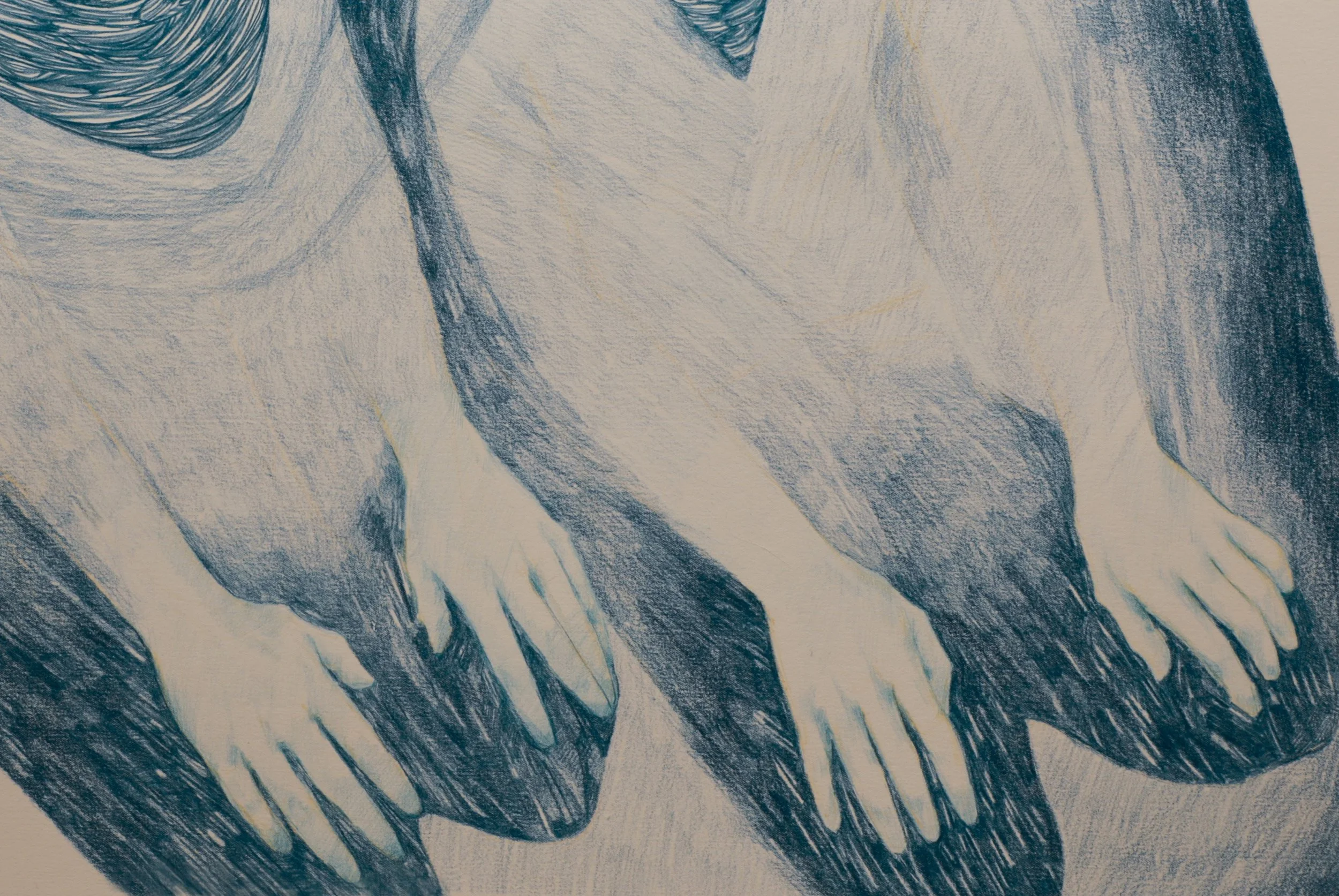
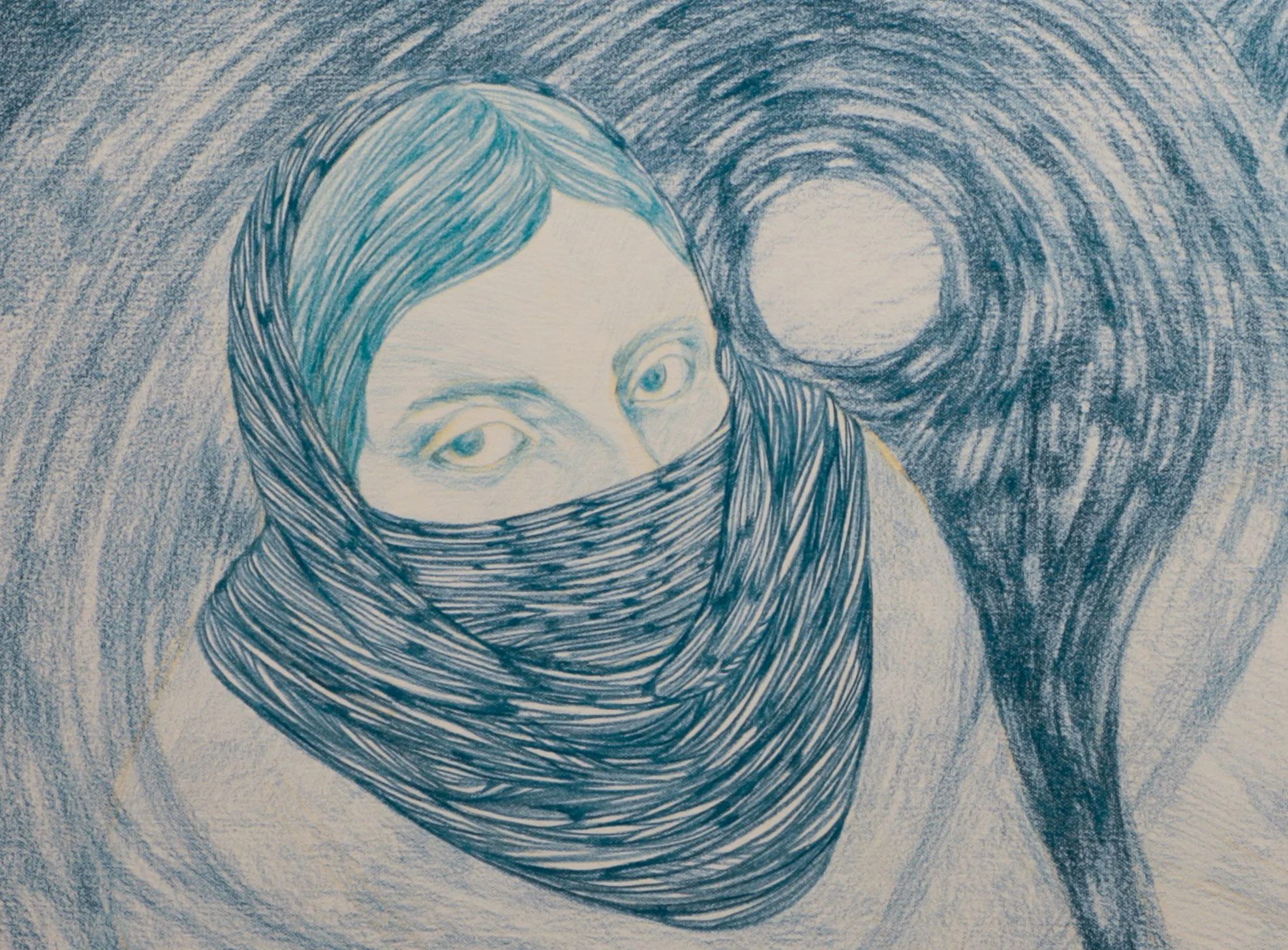
ER: Yes, entirely. Every drawing starts as an act of remembering before it's anything else. But I don't think I'm just recording what happened. I'm deciding what's worth carrying forward, which is a different act. Memory is selective by nature, and I've come to see that selectiveness as political rather than a limitation. I leave the drawings a little unresolved on purpose, so there's room for someone else's memory to enter the image alongside mine. I'm not trying to document a specific protest so precisely that it can only mean that one event. I want the gesture to be recognizable enough that someone who lived through a completely different movement, in a different country, still sees themselves in it.
What I hope survives is less an image than a conviction: that the people around you in struggle are capable of tenderness toward you, even strangers, even amid violence and defeat. Movements end, demands go unmet, governments and imperial and colonial powers outlast us. But if that conviction survives, if it's available to be remembered and drawn on again, then something real got carried forward, even through the losses. That's what I want the drawings to hold in trust for whatever comes next.
This conversation is part of عزیزم، دنیا گلستون میشه یک روز / ‘My dear, one day the world will bloom into a garden’, conceived by Yalda Bidshahri for the ROSVÂ Summer 2026 Guest Curator Residency